Professional servicing is important, but the way a pressure cleaner is checked before use and put away afterwards matters too. A short operator routine can help identify visible problems and keep the machine ready for its next job.
The correct procedure always comes from the manual supplied for the specific machine. The steps below reflect guidance found across our Jetblaster manuals and are intended as a practical reminder—not a replacement for model-specific instructions or qualified repairs.
Before starting, confirm the basics
Before operating the machine, check that its water supply is properly connected and turned on. Where the machine requires power, confirm the power connection in accordance with its manual.
Water supply is especially important. Our manuals repeatedly warn against running a pump dry because this can damage pump components. Do not start simply because the rest of the job site is ready; make sure the machine is ready too.
Check the gun, hose, lance, nozzle and connections
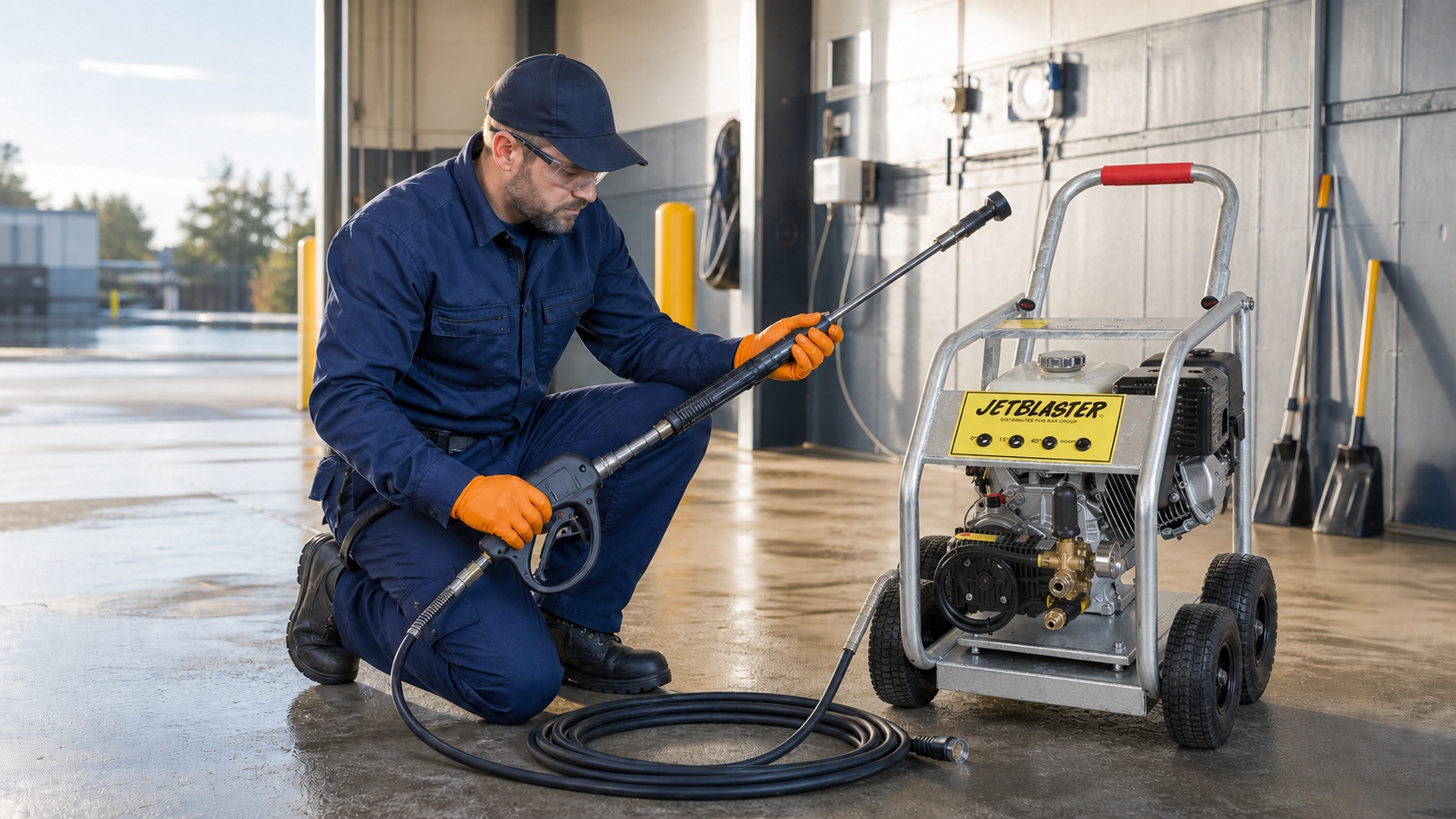
Take a moment to inspect the parts you can see. Our Slimline manual tells operators to check the gun, hose, lance, nozzle and internal components for signs of leakage before use.
If a leak is present, do not continue operating the machine. Contact a service agent and have the required repair completed before returning the unit to work.
The high-pressure hose should also be untangled and clear of obstructions before cleaning begins. After use, put the gun, lance and hose away so they are less likely to be damaged.
Follow the manual for oil and filter checks
Some Jetblaster manuals call for the pump oil level and inlet water filter to be checked weekly. The exact oil, checking method and change interval vary by model, so use the instructions for your machine.
The inlet water filter may need more frequent cleaning when conditions require it. Keeping the filter clean helps stop debris from reaching the pump.
These are routine checks only. Do not improvise mechanical or electrical repairs. Our manuals direct owners to a qualified technician or service agent for faults and repairs.
Flush the system after using cleaning agents
If cleaning agents have been run through the pump, our Slimline instructions say to flush the system thoroughly with clean water. This removes chemical residue from the pump and internal components.
The correct detergent and flushing procedure depend on the machine, so follow its manual and the supplied cleaning-product instructions.
Avoid unnecessary stop-start operation
Several of our manuals advise operators not to rapidly or unnecessarily cycle the trigger. The exact controls differ between machines, but the principle is straightforward: operate the machine as its manual directs and switch it off when it is not in use.
For hot-water equipment, the shutdown process can also include model-specific cooling steps. Always follow the stated sequence rather than assuming every pressure cleaner stops in the same way.
Know where operator care ends
An operator check can find a leak, a dirty filter, visible accessory damage or a change in how the machine runs. It does not replace diagnosis or repair.
If the machine is leaking, has lost pressure, is pulsating, sounds different or is not operating as described in its manual, stop and seek service advice. We service, diagnose and repair all brands of pressure cleaners, supported by more than 40 years of experience.
Make the routine part of the working day
The most useful routine is one that operators can follow consistently: check the supplies, inspect visible components, use the equipment according to its manual, flush it when required and store the accessories safely.
When the machine needs more than an operator check, contact us or use our Service page to find a listed service agent.