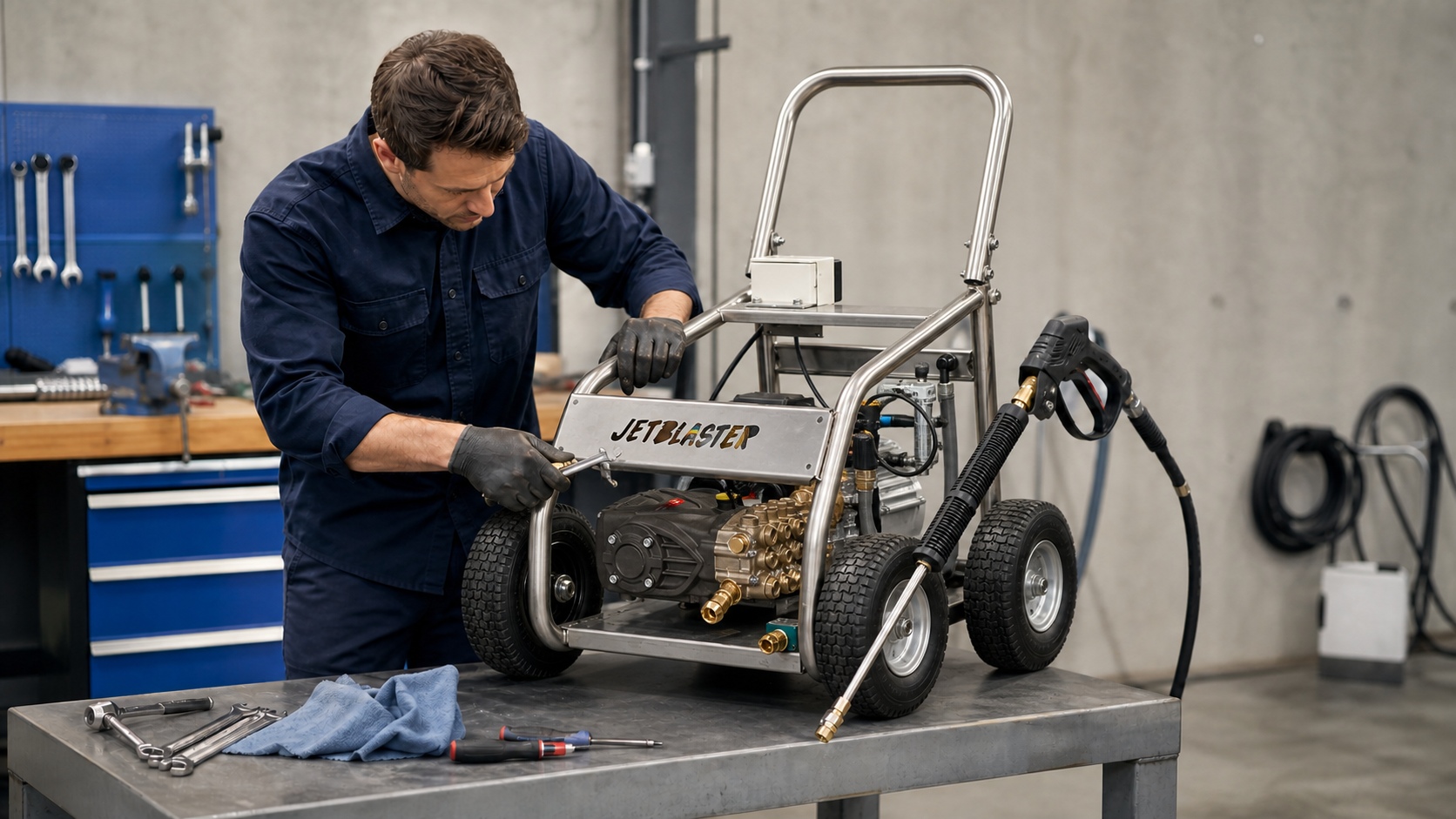
When a pressure cleaner is an important part of the working day, servicing should be more than a quick glance at the machine. A useful service looks at the components that keep water moving, pressure controlled and the complete unit operating as intended.
At Jetblaster, we have more than 40 years of experience servicing, diagnosing and repairing all brands of pressure cleaners. Although the exact service requirements depend on the machine and its manual, our own documentation provides a clear picture of the areas that may need attention.
A service starts with the pump and its oil
The pump is central to a pressure cleaner, so its condition matters. Depending on the machine, a service can include inspecting the pump oil and changing it when required.
Oil requirements and service intervals are not identical across every model. That is why we recommend following the manual for the specific machine rather than applying one general rule to every pressure cleaner.
The inlet water filter needs attention too
A pressure cleaner relies on an adequate water supply, and the inlet water filter helps prevent debris from reaching the pump. Our manuals call for this filter to be inspected and cleaned, with replacement where required.
This is a small component with an important role. The maintenance section of our Universal Hot Water Pressure Cleaner manual warns that a clogged inlet water filter can allow debris into the pump and can cavitate the water to the machine, causing damage.
Unloader and safety valves are part of the inspection
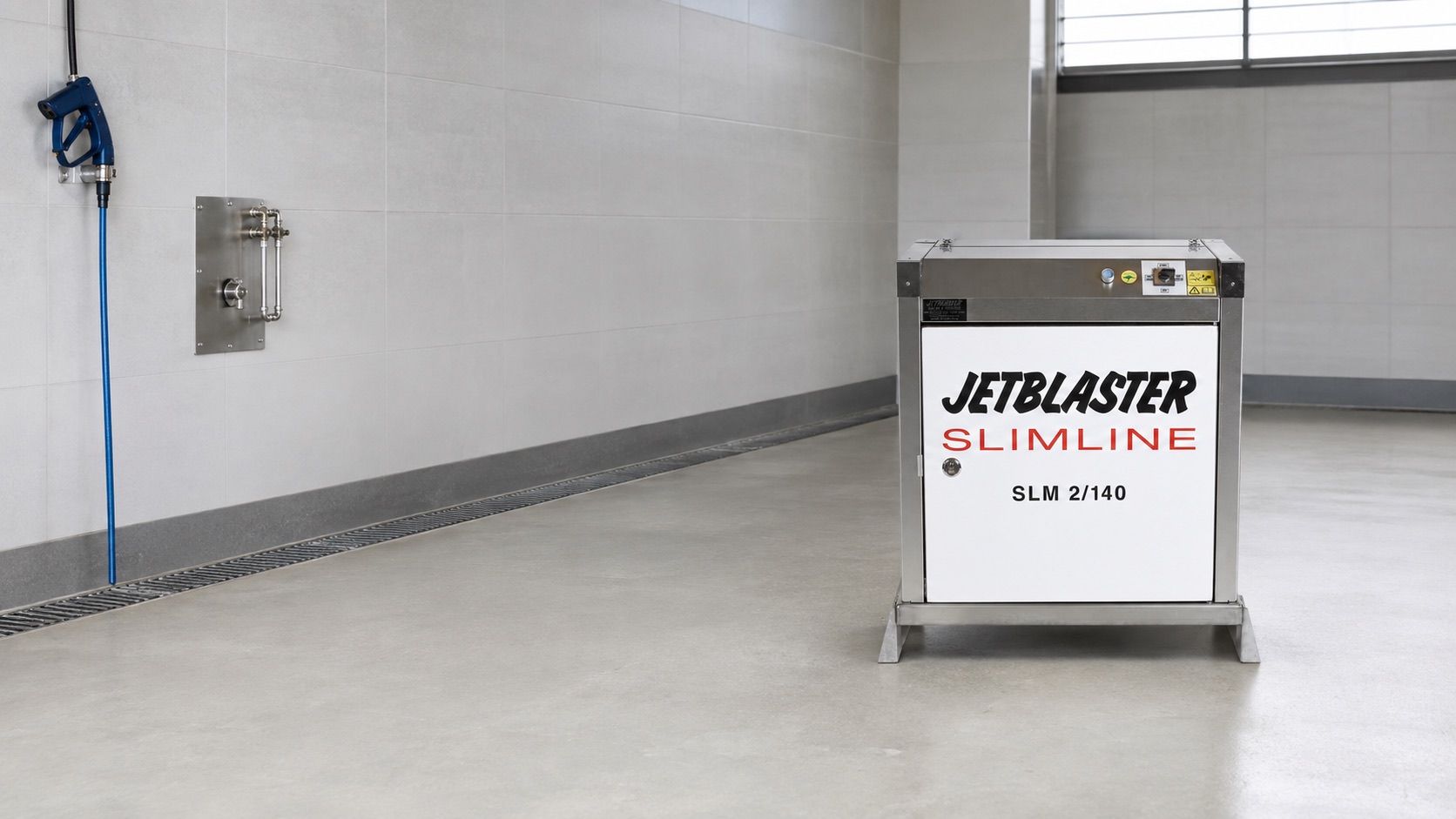
The unloader and safety valves are not settings for an operator to experiment with. Our Slimline documentation includes inspection of both valves as part of a standard service, while our manuals warn against unauthorised pressure adjustment.
If a machine has a pressure issue that cannot be resolved through the checks described in its manual, the right next step is to contact a qualified service technician rather than keep adjusting the machine.
Connections, clamps and hoses need a close look
Pressure cleaners operate with water, pressure and vibration. Our Slimline service checklist includes tightening hose clamps and electrical connections that may loosen through vibration, as well as checking internal and external hoses for leaks.
Leaks should not be treated as normal. The Slimline manual instructs operators to check the gun, hose, lance, nozzle and internal components before use, and not to operate the machine if a leak is found.
Worn accessories can affect the whole job
Guns, lances, hoses and nozzles work at the front line of every cleaning task. A standard service may include replacing worn accessories rather than waiting for them to fail.
We also stock a range of replacement parts and accessories, and our Parts and Accessories page explains that we can source an item when it is not already on our shelves. The correct response may be a service, a repair or the replacement of a worn component—not necessarily replacing the complete machine.
The final step is an operating test
A list of individual checks is useful, but the machine also needs to work as a complete system. Our Slimline service checklist finishes with a full operational test to confirm that the machine meets its performance specifications.
That final test brings the service together: oil, filters, valves, connections, hoses and accessories all need to support the way the machine is designed to operate.
Talk to us about your pressure cleaner
The exact checklist should always be matched to the model, its condition and the instructions in its manual. If your pressure cleaner is due for attention, contact us to discuss servicing, diagnosis or repair. If you are not near our Bayswater location, our Service page also lists agents in Australia and New Zealand.